Roof Pitch Formula
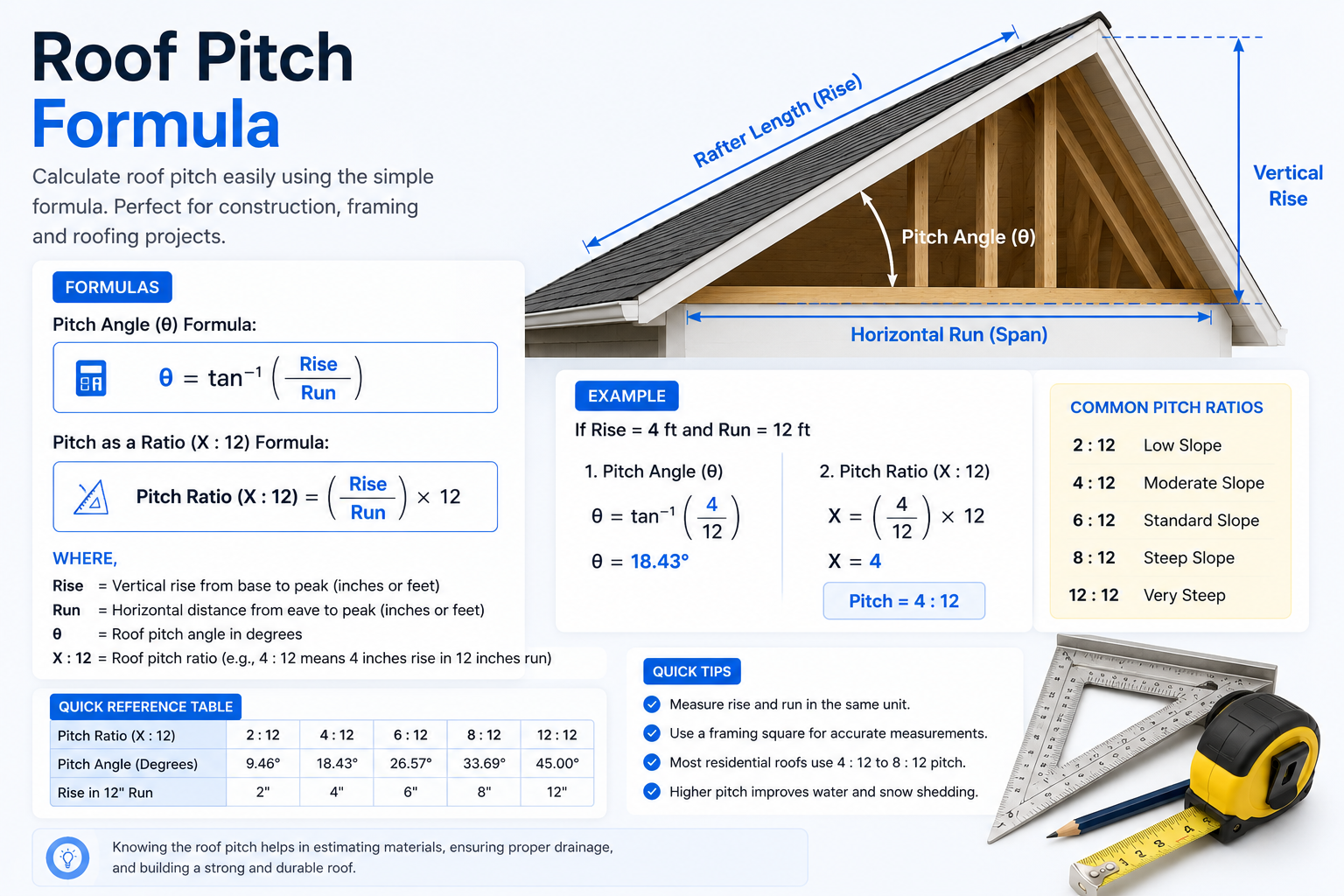
The Roof Pitch Formula is used to calculate the slope or steepness of a roof. Builders, roofers, architects, homeowners, and construction professionals use roof pitch to plan roofing materials, drainage, attic space, roof design, and structural safety. A roof pitch shows how much a roof rises vertically for every 12 inches of horizontal run.
Roof pitch is important because it affects roof appearance, water flow, snow load, roofing material choice, and construction cost. A low-pitch roof may need special waterproofing, while a steep roof may require more material and labor. By using the correct roof pitch formula, users can better understand roof measurements and plan roofing projects more accurately.
Roof Pitch Formula
The standard roof pitch formula is:
In roofing, pitch is often written as rise over 12. This means if a roof rises 6 inches for every 12 inches of run, the roof pitch is written as 6/12.
Roof Pitch Calculator
How to Calculate Roof Pitch
To calculate roof pitch manually, measure the vertical rise of the roof and divide it by the horizontal run. The most common roofing method uses 12 inches of run as the base measurement. For example, if your roof rises 6 inches over a 12-inch run, the pitch is 6/12.
Example:
This means the roof has a 6/12 pitch, which is considered a medium slope roof. This type of roof is common in many residential homes because it provides good drainage without being too steep.
Roof Pitch Example Table
| Rise | Run | Roof Pitch |
|---|---|---|
| 3 inches | 12 inches | 3/12 pitch |
| 4 inches | 12 inches | 4/12 pitch |
| 6 inches | 12 inches | 6/12 pitch |
| 8 inches | 12 inches | 8/12 pitch |
| 12 inches | 12 inches | 12/12 pitch |
Why Roof Pitch Calculation Is Important
Roof pitch calculation is important because it affects both roof performance and building design. A roof with the wrong pitch may cause water drainage problems, material failure, or higher maintenance costs. Steeper roofs usually shed rain and snow faster, while flatter roofs need stronger waterproofing and drainage systems.
Roof pitch also affects the choice of roofing materials. Asphalt shingles, metal roofing, clay tiles, and flat roof membranes all have different pitch requirements. Knowing the roof pitch helps homeowners and contractors choose suitable materials and avoid installation issues.
- Helps calculate roof slope
- Improves roofing material planning
- Supports better water drainage
- Helps estimate roof construction cost
- Useful for roof repair and replacement
- Important for builders, architects, and homeowners
- Helps determine roof safety and design
Benefits of Using a Roof Pitch Calculator
- Fast roof slope calculation
- Simple and beginner-friendly
- Helpful for roofing estimates
- Useful for home renovation planning
- Reduces manual calculation mistakes
- Works for roof repair and new construction
- Supports better material selection
Frequently Asked Questions
What is the roof pitch formula?
The roof pitch formula is Rise ÷ Run. It is commonly written as rise over 12 inches of run.
What does a 6/12 roof pitch mean?
A 6/12 roof pitch means the roof rises 6 inches for every 12 inches of horizontal run.
Is a higher roof pitch better?
A higher roof pitch improves water and snow drainage, but it may increase material and labor costs.
Can I use this formula for any roof?
Yes. The roof pitch formula can be used for most sloped roofs, including residential and commercial roof designs.
Final Words
The Roof Pitch Formula is a simple but important calculation for roofing, construction, design, and renovation projects. Whether you are planning a new roof, replacing old roofing materials, checking drainage, or estimating project cost, knowing the correct roof pitch helps you make better decisions and avoid costly mistakes.